
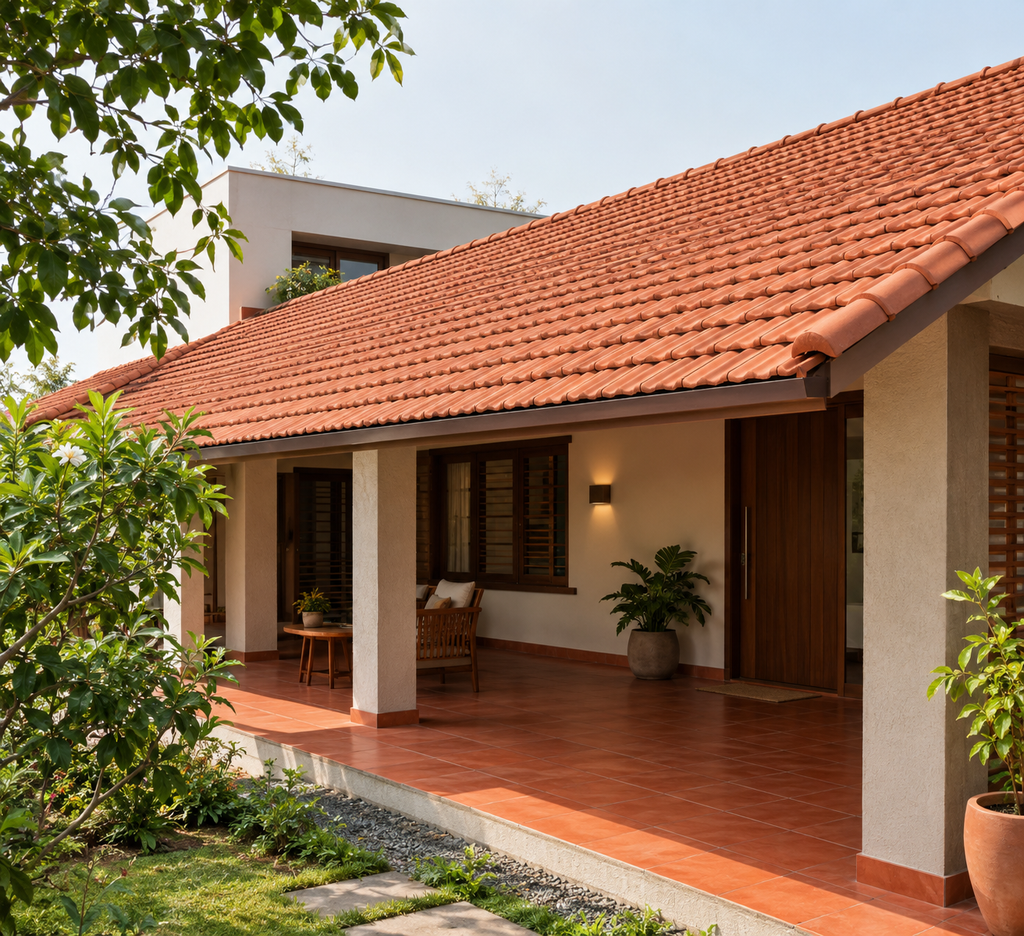
Terracotta tiles show up in more places in a home than most people realise — not just on the roof, but underfoot in living rooms, across courtyards and driveways, and occasionally on walls as cladding. The material stays the same (fired natural clay), but the tile itself changes shape, size, and finish depending on where it’s going. A tile built to shed monsoon rain on a sloped roof is a very different product from one designed to sit flat and cool underfoot indoors.
This guide walks through how to choose terracotta tiles for the three places they’re most commonly used in Indian homes — roofing, flooring, and outdoor paving — along with the design and practical factors that should shape your decision, whether you’re building new or renovating.
Why Terracotta Tiles Are Still a Popular Choice
Terracotta has stayed relevant in Indian residential architecture for a mix of practical and aesthetic reasons. As a fired clay product, it has a natural thermal mass that responds differently to heat than concrete or metal, which is one reason terracotta roofing and flooring is associated with cooler interiors in hot climates. It’s also a material that ages visually rather than degrading colour and texture shift slightly over the years rather than fading or peeling the way painted or coated surfaces can.
That said, terracotta isn’t a single interchangeable product. Roof tiles, floor tiles, and paving tiles are manufactured differently for different loads, exposures, and finishes, so the right choice depends heavily on where the tile is going and what it needs to do there.
Terracotta Roof Tiles: What to Look For
Terracotta roof tiles are designed for sloped roofs, where their profile helps shed rainwater and their thermal mass helps reduce heat transfer into the building below.
Interlocking Profile and Size
Most terracotta roof tiles are manufactured with an interlocking profile that keeps tiles aligned and weather-tight when laid in courses. Terracon’s Eurocotto Roof Tiles collection, for example, uses a standard 420 × 260 mm interlocking tile requiring approximately 1.25 tiles per square foot, at roughly 3.3 kg per tile, based on the current Eurocotto Roof Tiles product page. The collection is available in multiple finishes Light Red, Burgundy, Deep Blue, Autumn Blend, Blue, Natural Red, and a glass-finish variant plus matching ridge tiles for the roof crest.
Weight and Roof Structure
Roof tiles carry real weight, and a roof’s supporting structure (battens, rafters, or RCC slab) needs to be designed or verified to carry the load of the chosen tile across the full roof area. This is a structural question for your architect or engineer, not something to estimate from a product brochure alone.
Slope and Drainage
Terracotta roof tiles rely on adequate slope to shed water effectively. The correct minimum pitch depends on the tile profile and regional rainfall patterns, so it’s worth confirming this with your architect or installer rather than assuming one figure applies to every roof.
Ceiling Tiles as a Secondary Layer
On many fabricated or sloped roofs, terracotta roof tiles are paired with a separate layer of clay ceiling tiles fitted beneath them. The ceiling tiles sit below the outer, weather-facing roof tiles and add a secondary layer of thermal insulation while finishing the underside of the roof.
Installation on Existing RCC Roofs
Terracotta roof tiles can also be laid over an existing RCC (reinforced cement concrete) roof using a suitable mortar bed. Provided the structure and required slope and drainage are properly assessed, this is a common approach for adding a terracotta finish to a flat concrete roof or extension.
Terracotta Floor Tiles: What to Look For
Indoor terracotta flooring is a different product from roof tiles, typically flatter, smoother, and sized for interior laying patterns.
Size and Finish Options
Terracon’s Eurocotto Flooring Tiles range spans multiple sizes, from 150 × 150 mm up to 400 × 400 mm, in both regular (matte) and glazed finishes, according to the Eurocotto Flooring Tiles page. Coverage requirements vary by size for instance, 150 × 150 mm tiles need about 4 tiles per square foot, while 300 × 300 mm and 400 × 400 mm tiles are typically specified at 1 per square foot. Colour options include Light Red, Autumn Blend, Grey, Cappuccino, and Chocolate, with hexagonal and step-tile formats also available.
Regular vs Glazed Finish
A regular (unglazed) finish keeps the tile’s natural matte, porous surface closer to traditional terracotta while a glazed finish adds a smoother, less porous surface layer that’s easier to clean but changes the tile’s natural appearance. Which one suits a space depends on the look you want and how much foot traffic or moisture the area sees.
Where Indoor Terracotta Works Well
Terracotta flooring is commonly used in living rooms, verandas, covered courtyards, and other interior or semi-covered spaces. Because the clay body is naturally porous, it benefits from sealing before grouting something to factor into your installation plan rather than an optional afterthought, particularly in humid climates.
Underfoot Comfort
One frequently cited benefit of terracotta flooring is that it stays comfortably cool underfoot, a result of the material’s natural thermal properties rather than any applied coating.
Terracotta Paving Tiles: What to Look For
Outdoor paving is a distinct category again, built for direct weather exposure and foot or vehicle traffic rather than indoor use.
Thickness and Texture
Terracon’s Terracotta Paving Tiles are a thicker product than indoor flooring tiles, 38–40 mm thick, in a 230 × 110 mm format, according to the Terracotta Paving Tiles page. The surface finish is naturally textured, which is part of what gives paving tiles their slip resistance in wet conditions.
Slip Resistance and Weather Exposure
Because paving tiles sit outdoors driveways, courtyards, pool decks, and garden paths slip resistance and weather resistance matter more than they do for indoor flooring. A textured, unglazed surface is generally preferred for this reason over a smooth or glazed one.
Slope for Drainage
As with roofing, outdoor paved areas need adequate slope commonly cited at a minimum of around 2% to allow water to run off rather than pool, which helps prevent moisture-related staining or long-term wear.
Comparing Terracotta Roof, Floor & Paving Tiles
| Factor | Roof Tiles | Floor Tiles (Indoor) | Paving Tiles (Outdoor) |
| Typical thickness | Profiled, interlocking | Standard tile thickness | Thicker (38–40 mm) |
| Surface finish | Natural / textured | Regular (matte) or glazed | Natural, textured |
| Primary function | Weatherproofing, thermal comfort | Interior flooring, aesthetics | Outdoor durability, slip resistance |
| Typical sizes | Larger interlocking formats | 150×150 mm to 400×400 mm | 230×110 mm |
| Key installation factor | Roof slope, structural load | Level substrate, sealing | Drainage slope, jointing |
| Common applications | Sloped roofs, RCC roof extensions | Living areas, verandas, courtyards | Driveways, patios, pool decks |
This is a general comparison to help with initial planning always confirm exact specifications for your chosen product against the current product page before finalizing an order.
How to Choose the Right Terracotta Tile: A Selection Framework
Use this checklist to narrow down the right terracotta product and design for your project:
- Location – Is the tile going on a sloped roof, an interior floor, or an exposed outdoor surface? Each has a different product category.
- Structural context – Roof tiles need a compatible batten or RCC structure rated for the tile’s weight; large paving areas need proper base preparation.
- Weather exposure – Outdoor tiles (roof and paving) need higher weather and slip resistance than indoor flooring.
- Finish preference – Regular/matte vs glazed for floors; natural textured for roofing and paving.
- Size and coverage – Confirm the tile’s coverage rate (tiles or sq. ft. per unit) to estimate quantity accurately.
- Colour and pattern – Terracotta ranges typically offer multiple natural shades; check what’s currently available for your chosen product line.
- Installation method – Roofing battens, tile adhesive on a screed, or mortar bedding for paving confirm with your installer.
- Maintenance expectations – Sealing intervals, cleaning method, and how much upkeep the space can realistically get.
- Budget and quantity – Larger-format tiles often mean fewer pieces per square foot but can cost more per unit; get a project-specific quote rather than estimating from list price alone.
- Supplier verification – Confirm current specifications directly with the manufacturer, since sizes, finishes, and coverage rates can be updated over time.
Design Considerations for Modern Homes
Beyond function, terracotta tiles carry a distinct design language that’s worth planning around rather than defaulting to.
Matching Roof and Facade Tones
Many homeowners coordinate their roof tile colour (Light Red, Burgundy, Autumn Blend, and similar shades) with the facade or wall cladding tone so the building reads as a cohesive palette rather than mismatched materials.
Mixing Matte and Glazed Floors
Because Eurocotto Flooring Tiles come in both regular and glazed finishes, some homes use a matte finish in high-traffic living spaces and a glazed finish in more decorative or lower-traffic areas, though this is a design preference rather than a fixed rule.
Indoor–Outdoor Continuity
Using terracotta both indoors (flooring) and outdoors (paving), even in different formats can help create visual continuity between a living space and an adjoining courtyard, veranda, or patio.
Terracotta Alongside Jali and Cladding
Terracotta tiles are often used alongside other terracotta architectural elements terracotta jali screens for ventilation and shade, or terracotta wall cladding for facade texture to create a consistent material story across a building rather than treating roofing, flooring, and walls as unrelated choices.
Terracotta Tiles for India’s Climate
India’s mix of intense summer heat, heavy monsoon rainfall, and regional humidity is a major reason terracotta has remained a practical roofing and flooring material rather than a purely decorative one. A few climate-related points worth keeping in mind:
- Terracotta’s thermal mass is commonly associated with cooler interiors compared to metal roofing, though actual indoor temperature depends on the whole building design, not the roof material alone.
- Roofing and paving tiles need adequate slope to handle monsoon rainfall without water pooling or seeping.
- Coastal areas with salt air exposure benefit from confirming a tile’s weather-resistance rating with the manufacturer before installation.
- Indoor terracotta flooring in humid regions benefits from proper sealing to manage the material’s natural porosity.
As with any thermal or performance claim, treat specific numbers (like an exact temperature reduction or energy saving) with some caution unless they come from a verified, project-specific source general architectural benefit and precise measured performance are two different things.
Maintenance and Care Across Roof, Floor & Paving Tiles
| Area | Maintenance Guidance |
| Roof tiles | Annual post-monsoon inspection to clear moss, leaf litter and debris; check for cracked or dislodged tiles |
| Floor tiles | Routine sweeping and damp-mopping with a pH-neutral cleaner; avoid acidic or bleach-based products, which can strip sealant |
| Paving tiles | Routine sweeping and occasional washing with water; sealing is optional but recommended in high-traffic outdoor areas |
| All terracotta | Periodic resealing (commonly every 2–4 years for outdoor or heavily exposed installations) to manage natural porosity |
FREQUENTLY ASKED QUESTIONS
How do I choose the right terracotta tile for my home?
Start with where it’s going roof, indoor floor, or outdoor paving, since each application uses a different tile format and finish. Then consider weather exposure, structural compatibility, finish preference, and required quantity before finalising a specific product.
Are terracotta roof tiles suitable for RCC roofs?
Yes. Terracotta roof tiles can be installed over an existing RCC roof using a suitable cement mortar bed, provided the roof structure, slope, and drainage are properly assessed.
What’s the difference between regular and glazed terracotta floor tiles?
A regular finish keeps the tile’s natural matte, porous surface, while a glazed finish adds a smoother, less porous top layer. The choice depends on desired appearance and how much moisture or traffic the space will see.
Can terracotta floor tiles be used outdoors?
Indoor flooring tiles and outdoor paving tiles are different products paving tiles are thicker and more textured for slip resistance and weather exposure. Use a product designed for outdoor paving rather than an indoor flooring tile outdoors.
Do terracotta tiles need sealing?
Generally, yes. Because terracotta is naturally porous, sealing before grouting is commonly recommended, with outdoor installations typically resealed every 2 to 4 years depending on weather exposure.
How much does terracotta roofing weigh, and does that matter?
Roof tiles have real weight per unit for example, Terracon’s Eurocotto Roof Tiles are rated at approximately 3.3 kg per tile. The total roof load needs to be checked against the supporting structure by your architect or engineer.
Can terracotta tiles be used for both roofing and flooring in the same home?
Yes, and many homes do exactly this — pairing roof tiles with matching or complementary floor and paving tiles for a consistent material palette across the building.