
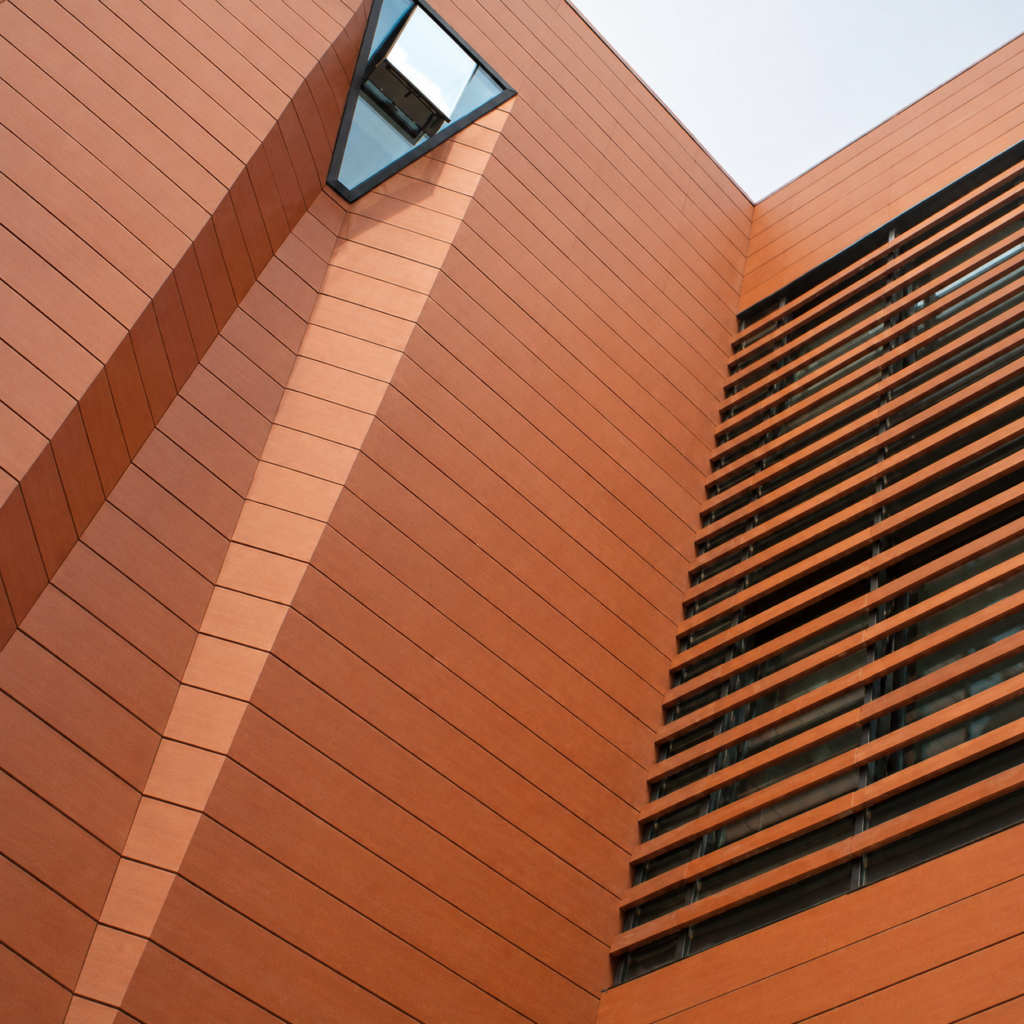
A terracotta facade is an exterior cladding system made from fired clay panels or tiles, fixed to a building’s outer wall to improve its appearance, weather resistance, and thermal performance. Rather than forming the structural wall itself, a terracotta facade sits as a protective and decorative outer layer, one of the reasons it has become a go-to choice for architects designing contemporary commercial, institutional, and residential buildings across India.
If you’ve been searching for a facade material that looks natural, ages well, and doesn’t need repainting every few years, terracotta is worth understanding properly before you specify it. This guide covers what a terracotta facade actually is, how it works, where it’s used, and what to consider before choosing it for your project.
What Is a Terracotta Facade?
Terracotta literally means “baked earth.” It’s natural clay that has been shaped and fired at high temperatures until it becomes hard, dense, and weather resistant, the same basic process used to make roof tiles, bricks, and pottery for thousands of years.
A terracotta facade takes this material and turns it into an architectural cladding system: flat panels, tiles, or profiled elements that are fixed to the exterior of a building. It’s important to understand the distinction between a terracotta facade element and a structural wall. The facade panel isn’t load-bearing. It doesn’t hold the building up. Instead, it’s mounted onto the building’s existing exterior wall or structural frame, acting as an outer architectural layer that protects the structure underneath while giving the building its visual identity.
This is different from, say, a terracotta brick wall, where the material itself is structural. In a facade system, terracotta functions purely as cladding, similar in concept to how natural stone or metal panels are used on modern building exteriors.
How Does a Terracotta Facade Work?
A terracotta facade is one part of a layered exterior wall system, not a standalone finish. Understanding the basic layers helps clarify why terracotta facades perform the way they do:
- The building’s structural wall — brick, block, or concrete, which provides the actual load-bearing structure.
- A supporting or fixing system — typically an aluminium or metal substructure fixed to the wall, which the terracotta panels are mounted onto.
- The terracotta cladding layer — the visible panels or tiles, fixed to the substructure using mechanical clips or fixing systems rather than adhesive alone.
Many terracotta facade systems use what’s known as a ventilated facade (or rainscreen) principle. In this setup, there’s a small air gap left between the back of the terracotta panel and the structural wall. This gap allows air to circulate, helps moisture escape rather than get trapped, and reduces heat transfer into the building. It’s a widely used approach in modern facade engineering because it directly addresses two of the biggest challenges for Indian buildings: monsoon moisture and sustained heat.
The exact fixing system, panel spacing, and cavity depth depend on the specific product and project requirements, which is why facade design is typically finalised with technical input from the manufacturer or facade consultant rather than assumed to be one-size-fits-all.
What Is Terracotta Facade Cladding Made Of?
Terracotta facade cladding is made from natural clay that’s shaped and fired at high temperatures, without paint or applied coatings. Any colour you see, whether a warm terracotta red, a grey, or a cappuccino tone, comes from the clay body itself or a fired ceramic finish, not a surface layer that can chip or fade.
Terracotta facade products are generally available in a few common forms:
- Flat panels — large-format rectangular panels used for clean, contemporary wall surfaces
- Grooved or textured panels — panels with a linear or textured surface finish for added depth and shadow lines
- Profiled tiles — smaller-format tiles, sometimes rod-like or interlocking, used for more traditional or detailed facade patterns
Terracon’s Terracotta Facade range, for example, is available in profiles like Light Red, Cappuccino, Grey, and Light Red Groove, in panel sizes generally ranging between 600×300 mm and 1000×300 mm, with thickness typically between 15mm and 19mm. These panels are installed using a ventilated mechanical fixing system, which keeps them independent of the wall behind and allows for the airflow described above.
Benefits of Terracotta Facades
Terracotta facades are popular for a combination of aesthetic and functional reasons. Here’s what generally makes the material worth considering:
Natural, timeless appearance. Because the colour is baked into the clay rather than painted on, terracotta facades have a warm, natural look that doesn’t read as trendy or dated the way some manufactured finishes can.
Weather and UV resistance. Fired clay is inherently resistant to sun exposure, rain, and temperature swings, qualities that matter a great deal in India’s climate, where facades face intense UV and heavy monsoon rainfall in the same year.
Architectural flexibility. Terracotta facade systems come in a range of profiles, textures, and colours, giving architects room to create anything from a minimal, clean-lined commercial building to a more textured, traditional facade.
Relatively low maintenance. Terracotta facades generally don’t need repainting, and routine care is usually limited to occasional cleaning and periodic inspection of the fixing system, rather than intensive upkeep.
Thermal performance in ventilated systems. When installed as part of a ventilated facade, the air cavity behind the panels can help reduce direct heat transfer into the building, supporting better indoor thermal comfort.
Durability. High-fired terracotta is a dense, hard material that resists staining, corrosion, and general wear over time.
It’s worth being realistic here too: no facade material is entirely maintenance-free, and “low maintenance” still means routine inspection, not zero attention. Terracotta’s actual thermal and durability performance also depends on the specific product, fixing system, and installation quality, not the material alone.
Where Are Terracotta Facades Used?
Terracotta facades suit a wide range of building types, largely because the material adapts well to both contemporary and traditional design languages.
| Building Type | Why Terracotta Suits It |
| Residential buildings | Warm, natural aesthetic; durable exterior for long-term homes |
| Commercial buildings | Clean, contemporary look with low long-term maintenance |
| Institutional buildings | Durable, weather-resistant finish suited to high-traffic exteriors |
| Hospitality projects (hotels, resorts) | Natural material appeal that supports a premium architectural identity |
| Offices | Professional appearance combined with thermal comfort benefits |
| Educational buildings | Long-lasting exterior that withstands years of weathering with minimal upkeep |
| Cultural and public buildings | Natural material connects contemporary design with traditional clay craftsmanship |
Across all of these, the underlying reasons tend to repeat: architects want a facade that looks good for decades, holds up to Indian weather, and doesn’t demand constant upkeep.
Terracotta Facade Design Options
One reason terracotta facades keep showing up in contemporary architecture is design flexibility. Rather than being limited to a single look, terracotta facade panels and tiles are available across several dimensions:
- Colours — from natural terracotta reds to greys, cappuccino, and custom shades
- Surface finishes — smooth, textured, and grooved options change how light and shadow play across the facade
- Profiles and shapes — flat panels, grooved panels, and profiled tiles each create a different rhythm on the building’s surface
- Panel arrangement patterns — panels can be arranged in horizontal bands, vertical lines, or mixed patterns to create custom architectural expressions
- Complementary elements — terracotta facades are often combined with terracotta jalis or perforated screens for buildings that want partial shading and ventilation alongside solid cladding
This range is why terracotta facades work equally well on a minimal modern office block and a building that wants to reference more traditional, textured brick and clay architecture.
Is Terracotta Cladding Heavy?
This depends entirely on the specific product, panel thickness, and format, so there’s no single weight figure that applies across all terracotta cladding.
What does matter, regardless of the exact weight, is that the fixing and substructure system needs to be engineered for the load of the chosen panels. This is a standard part of facade design: the structural and fixing consultant calculates the load based on the specific product selected, the building height, wind exposure, and other site-specific factors. Because of this, weight and load-bearing capacity should always be assessed for your specific project and chosen product rather than assumed from general figures, which is why manufacturers and facade consultants are typically involved early in the design process.
How Is Terracotta Facade Cladding Installed?
While the exact process depends on the fixing system and product selected, terracotta facade installation generally follows this sequence:
- Design and structural assessment — the facade design is finalised along with load calculations for the fixing system and structural wall.
- Substrate preparation — the underlying wall or structural frame is prepared and checked for suitability.
- Support and fixing system installation — the aluminium or metal substructure is fixed to the wall, forming the frame the panels will attach to.
- Panel or tile installation — terracotta panels are mechanically fixed to the substructure, typically using a ventilated fixing system that leaves an air cavity behind the panel.
- Alignment and joint finishing — panels are aligned and jointed according to the design, maintaining consistent spacing and pattern.
- Final inspection — the completed facade is checked for alignment, fixing security, and finish quality.
The actual installation details, including fixing type, joint width, and cavity depth, vary depending on the specific terracotta system and the project’s structural requirements, so this should always be confirmed with the manufacturer or installer for your particular building.
How Much Maintenance Does a Terracotta Facade Need?
Terracotta facades are considered relatively low maintenance compared to painted or coated exteriors, but “low maintenance” doesn’t mean “no maintenance.” A sensible upkeep routine typically includes:
- Routine visual inspection to check for any panel movement, cracking, or fixing issues
- Periodic cleaning to remove dust, dirt, or surface staining, usually with water and mild cleaning methods rather than harsh chemicals
- Fixing and joint inspection, especially after extreme weather events, to confirm the mechanical fixing system remains secure
- Professional inspection for taller or larger buildings, where facade access and safety considerations make DIY checks impractical
Because terracotta doesn’t rely on paint or surface coatings, it avoids the recurring repainting cycle that many other facade materials need, but the fixing system behind the panels still benefits from periodic professional attention.
Terracotta Facade vs Other Exterior Materials
No facade material is universally “better.” The right choice depends on your building type, budget, climate exposure, and design intent. Here’s how terracotta generally compares to other common facade materials:
| Material | Appearance | Durability | Design Flexibility | Maintenance | Typical Applications |
| Terracotta | Warm, natural, baked-in colour | High, resists UV and weathering | High, wide range of profiles and finishes | Low, mainly cleaning and inspection | Commercial, residential, institutional, hospitality |
| Brick | Traditional, textured, structural or veneer options | High | Moderate, largely defined by bond patterns and colour | Low to moderate | Residential, institutional, heritage-style buildings |
| Natural stone | Premium, varied natural texture | Very high | Moderate to high, but limited by material sourcing | Low, but stone can be costlier to source and install | High-end commercial, hospitality, landmark buildings |
| Metal cladding | Sleek, modern, reflective or matte finishes | Moderate to high, depends on coating and grade | High, easy to fabricate in custom shapes | Moderate, coatings can degrade over time and may need recoating | Contemporary commercial and industrial buildings |
| Ceramic/porcelain systems | Consistent, engineered finish, wide colour range | High | High, large format options available | Low | Commercial and institutional buildings |
Terracotta tends to stand out where a project wants a natural, non-manufactured material aesthetic combined with genuinely low long-term maintenance, without moving into the cost and sourcing complexity of natural stone.
Is a Terracotta Facade Suitable for Your Project?
Before specifying a terracotta facade, it helps to run through a few practical questions:
- Architectural style — Does your design call for a natural, textured material, or are you working with a more industrial or reflective aesthetic where metal or glass might fit better?
- Climate exposure — Is the building exposed to intense sun, heavy rain, or coastal conditions where weather resistance is a priority?
- Building type and height — Taller buildings may need more detailed structural and wind-load assessment for the fixing system.
- Budget — Terracotta facade costs vary by profile, panel size, and fixing system, so early conversations with a supplier help set realistic expectations.
- Maintenance expectations — Are you looking for a facade that avoids repeated repainting cycles, even if it still needs periodic cleaning and inspection?
- Design requirements — Do you need a wide range of colours, textures, or custom profiles, or is a simpler, more uniform finish sufficient?
- Installation timeline and access — Ventilated facade systems require coordinated installation of the substructure and panels, which should be factored into your project schedule.
If most of these point toward a natural, durable, design-flexible exterior with manageable long-term upkeep, terracotta is generally worth shortlisting alongside other facade options.
Frequently Asked Questions
What is a terracotta facade?
A terracotta facade is an exterior cladding system made from fired clay panels or tiles, fixed to a building’s outer wall to improve appearance, weather resistance, and thermal performance.
Is terracotta good for building facades?
Yes, terracotta is widely used for building facades because it offers natural aesthetics, strong weather resistance, and relatively low long-term maintenance, though suitability still depends on project-specific factors like budget and design intent.
Is terracotta cladding heavy?
Weight varies by product, thickness, and panel format, so there’s no single figure. The fixing and substructure system is engineered to suit the specific panels selected for a project.
Is terracotta durable?
Yes, high-fired terracotta is a dense, hard material that resists UV exposure, moisture, and general wear, making it a long-lasting facade material when properly installed and maintained.
Is terracotta suitable for modern buildings?
Yes, terracotta facade panels come in a range of profiles, colours, and finishes that suit both contemporary, minimal designs and more traditional architectural styles.
Does terracotta facade require maintenance?
Terracotta facades are relatively low maintenance, generally needing periodic cleaning and routine inspection of the fixing system, rather than repainting or heavy upkeep.